
Sodium-Ion Batteries: A New Approach to Home Battery Storage
Sodium-ion batteries are an emerging option for home battery storage, offering households another way to store electricity generated by solar panels and use it when they need it. As interest in renewable energy and energy independence grows, this technology is attracting attention as an alternative to established lithium-ion battery systems.
Lithium-ion batteries have become a popular choice for home energy storage. However, sodium-ion technology is developing rapidly, with potential advantages including the use of more widely available raw materials and promising performance in colder temperatures.
So, what exactly is a sodium-ion battery, how does it compare with lithium-ion technology, and could it be a suitable option for your home?
Let’s take a closer look.
What Are Sodium-Ion Batteries?
A sodium-ion battery is a rechargeable battery that stores and releases electricity by moving sodium ions between two electrodes. It works on a similar principle to a lithium-ion battery, but uses sodium rather than lithium to carry the electrical charge.
One of the main attractions of sodium is its availability. It is found in salt and other widely distributed natural deposits, making it a plentiful raw material. This creates opportunities to diversify battery material supply chains and reduce reliance on some of the materials used in other battery chemistries.
Sodium-ion technology has been developing for several years and is now moving into commercial applications, including large-scale energy storage and home battery systems.
Although it is still an evolving technology, sodium-ion batteries offer another option for households looking to store electricity and make better use of their energy.
Why Is Sodium-Ion Battery Technology Attracting Attention?
There are several reasons why sodium-ion batteries are attracting interest in the energy storage industry.
1. More Widely Available Raw Materials
Sodium is one of the most abundant elements on Earth. It is widely available in natural deposits, offering the potential to diversify the materials used in battery manufacturing.
This could help reduce reliance on certain mineral supply chains as demand for energy storage continues to grow.
It is worth remembering that the environmental impact of any battery depends on more than its main active material. Manufacturing processes, component sourcing, transportation, product lifespan and recycling all play an important role.
2. Potential Advantages in Colder Temperatures
Temperature can have a significant effect on battery performance. Some battery technologies experience reduced performance in colder conditions, which can be particularly relevant in the UK, where outdoor temperatures can fall considerably during winter.
Certain sodium-ion chemistries are attracting attention for their ability to operate at lower temperatures. The Eleven Energy Galvani sodium-ion battery system, for example, has specified operating temperature ranges that make it an interesting option for installations where temperature conditions need careful consideration.
Actual performance will depend on the installation environment, operating conditions and the manufacturer’s specifications.
3. Battery Safety and Stability
Safety is an important consideration when choosing any home battery storage system.
Some sodium-ion chemistries offer promising thermal stability characteristics compared with certain lithium-ion alternatives. However, battery safety depends on the complete system, including cell design, battery management, protection systems and installation quality.
It is therefore important to look at the safety testing and certifications of the complete battery product rather than relying on the chemistry alone.
4. More Choice for Home Energy Storage
Lithium-ion technology has played a major role in making home battery storage more accessible. Sodium-ion adds another option to the market, giving homeowners and installers more choice as battery technology continues to develop.
As manufacturing grows and the technology matures, sodium-ion could become an increasingly important part of the wider energy storage market.
Sodium-Ion Batteries vs Lithium-Ion Batteries: How Do They Compare?
Both sodium-ion and lithium-ion batteries store electricity using rechargeable electrochemical cells, but there are differences in their materials, characteristics and potential applications.
Lithium-ion batteries generally offer higher energy density, meaning they can store more energy for a given weight or volume. This makes them particularly useful in applications such as electric vehicles, where weight and available space are important.
Sodium-ion batteries use a more widely available raw material, and some sodium-ion chemistries offer promising performance in colder operating conditions.
For a fixed home battery installation, weight is often less important than it would be in an electric vehicle. Homeowners may be more interested in usable capacity, reliability, operating temperature, warranty and how easily the system integrates with their solar panels and household electricity supply.
There is no single battery chemistry that is best for every property. The right choice depends on the home, its energy requirements and the features of the particular battery system.
Introducing the Eleven Energy Galvani Sodium-Ion Battery System
For homeowners interested in exploring sodium-ion technology, the Eleven Energy Galvani is a modular home battery storage system designed to work as part of a modern home energy installation.
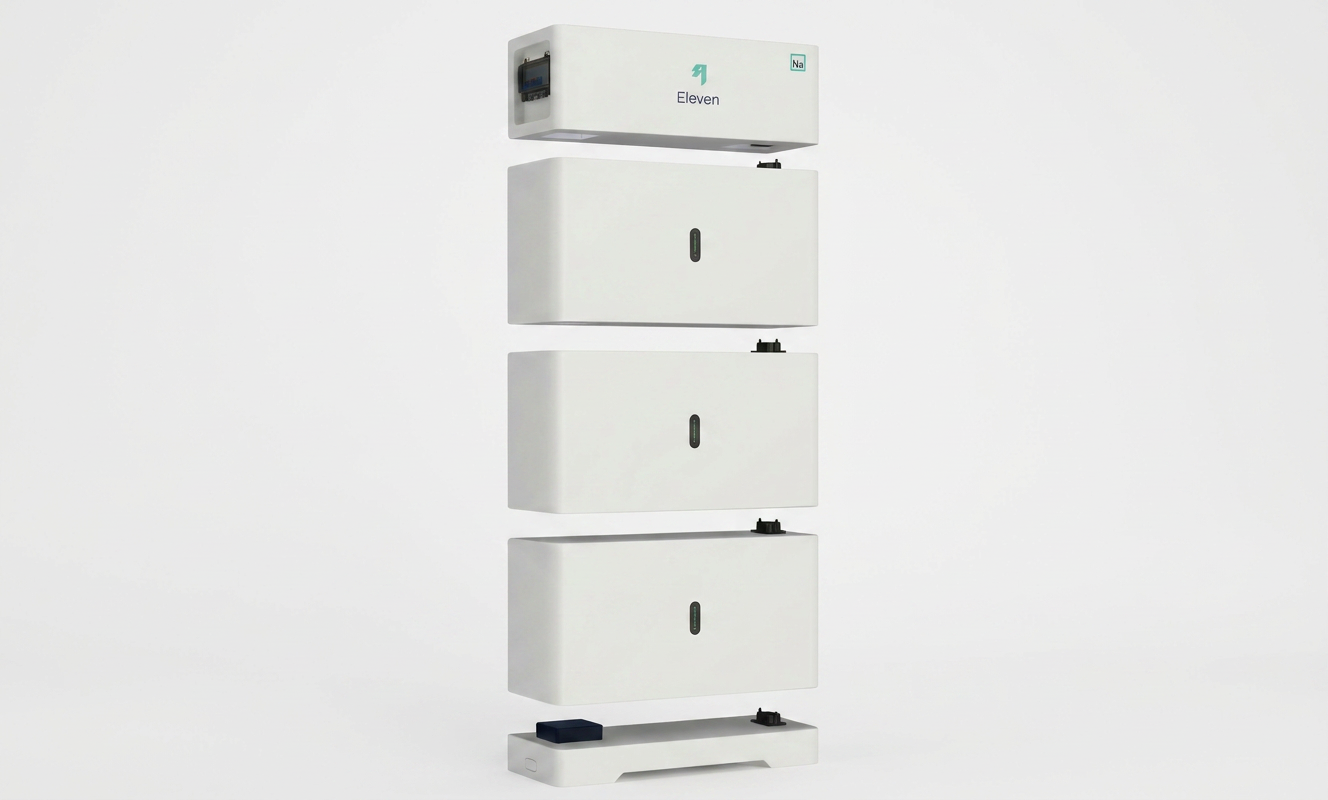
One of its key features is its stackable design. Rather than being limited to a single fixed battery capacity, the system can be configured using multiple battery modules.
Key product features include:
- 4.5 kWh per battery module
- Stackable modular design
- Up to four modules per stack
- Expandable configurations of up to 16 modules with a compatible inverter
- Up to 66.24 kWh usable capacity in the specified configuration
- Integrated connections between modules, avoiding the need for separate inter-battery cables
This modular approach gives homeowners flexibility when choosing a battery capacity. A smaller installation may be suitable for a household with modest electricity consumption, while a larger system may be more appropriate for a property with higher demand or greater solar generation.
The ability to expand a system can also be useful if household energy requirements change over time. The final configuration must be compatible with the selected inverter and the manufacturer’s installation requirements.
Your Home’s Energy, at a Glance – The Eleven Energy App
Imagine checking your phone each morning to see how much solar energy your home generated, how much electricity your battery stored and how much energy your household used.
The Eleven Energy app brings your home’s energy information together in one place.
You can monitor solar generation, battery charge levels, household consumption and electricity imported from or exported to the grid. You can also explore daily generation, energy statistics and appliance consumption to better understand where your electricity is going.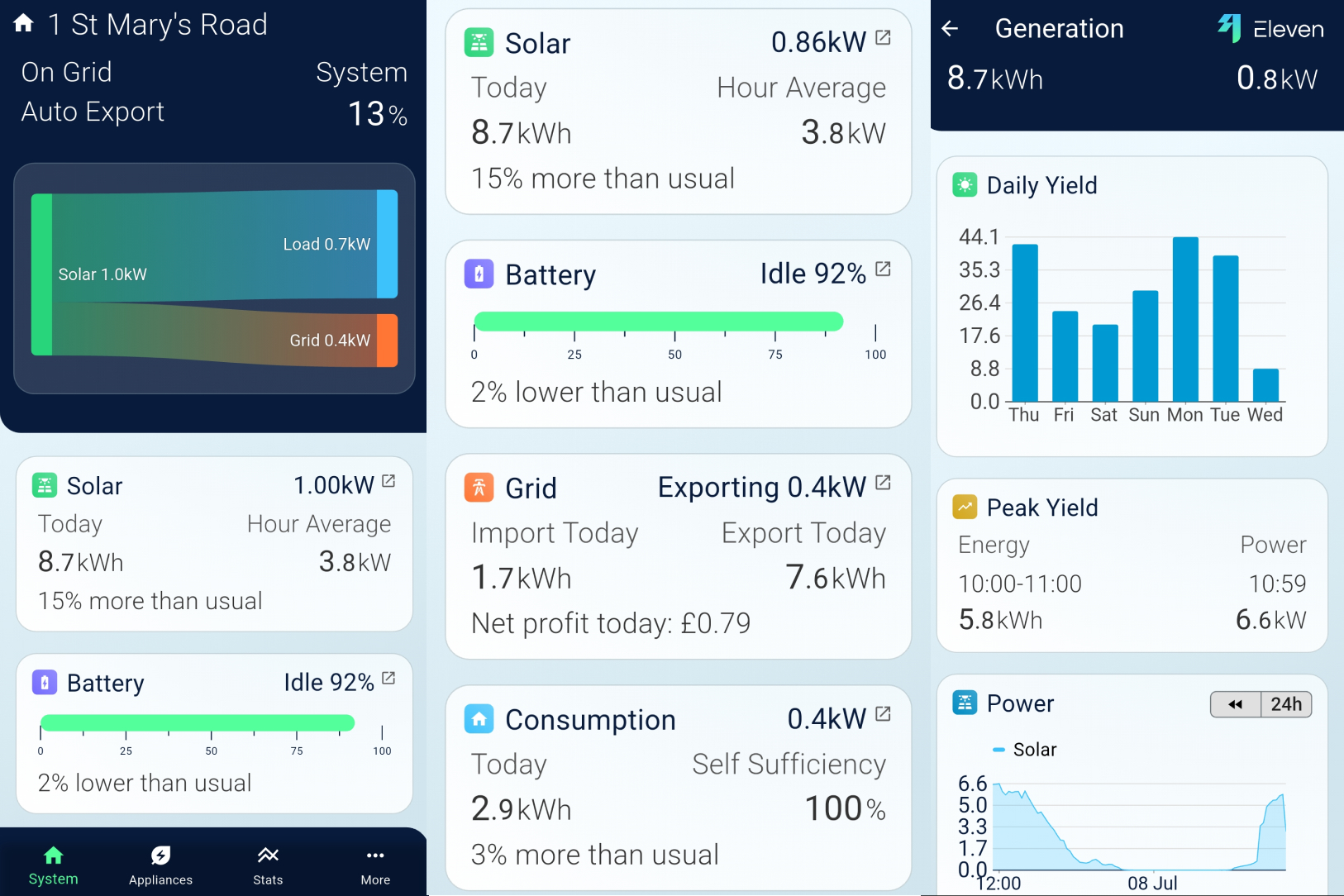
View solar generation, battery storage and household electricity use through the Eleven Energy app.
The app also offers automatic energy optimisation, using solar forecasts, expected household usage and electricity tariffs to help manage battery charging and energy export.
It’s a convenient way to understand how your home uses energy and get more from your solar and battery system.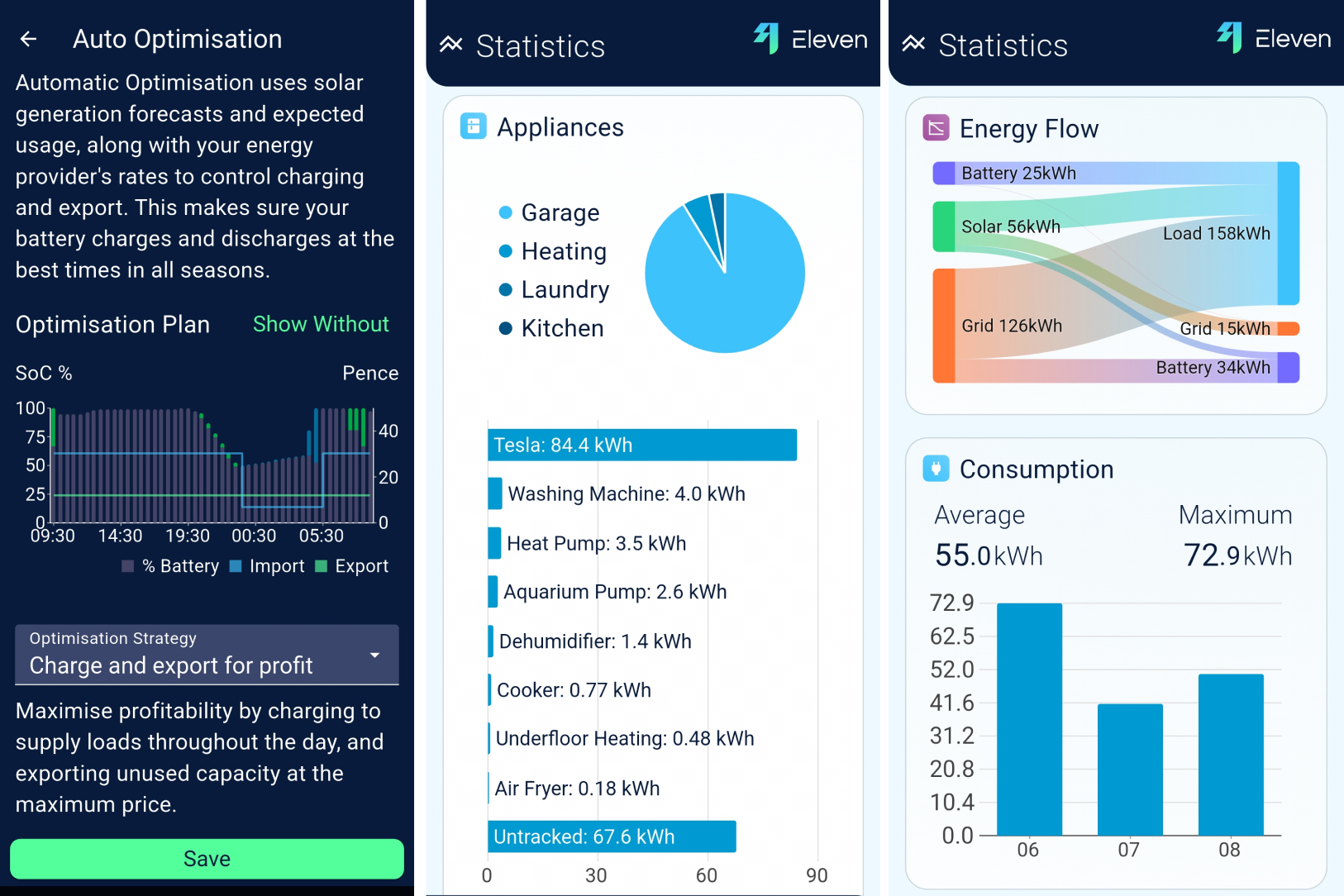 Explore energy statistics, appliance consumption and system information through the Eleven Energy mobile app.
More Control Over How Your Home Uses Energy
The benefits of battery storage can extend beyond powering everyday household appliances.
When combined with compatible smart switches, energy monitors and suitable control equipment, a home energy system can be configured to respond more intelligently to electricity generation and demand.
For example, it may be possible to:
- Direct surplus solar electricity towards an immersion heater to help heat domestic hot water.
- Monitor larger household loads, such as heat pumps, to better understand their electricity consumption.
- Coordinate battery operation with electric vehicle charging to help manage how stored energy is used.
- Make better use of available solar generation rather than automatically drawing electricity from the grid.
These integrations depend on the equipment being compatible and correctly configured. They can provide additional flexibility for households looking to make better use of their own electricity.
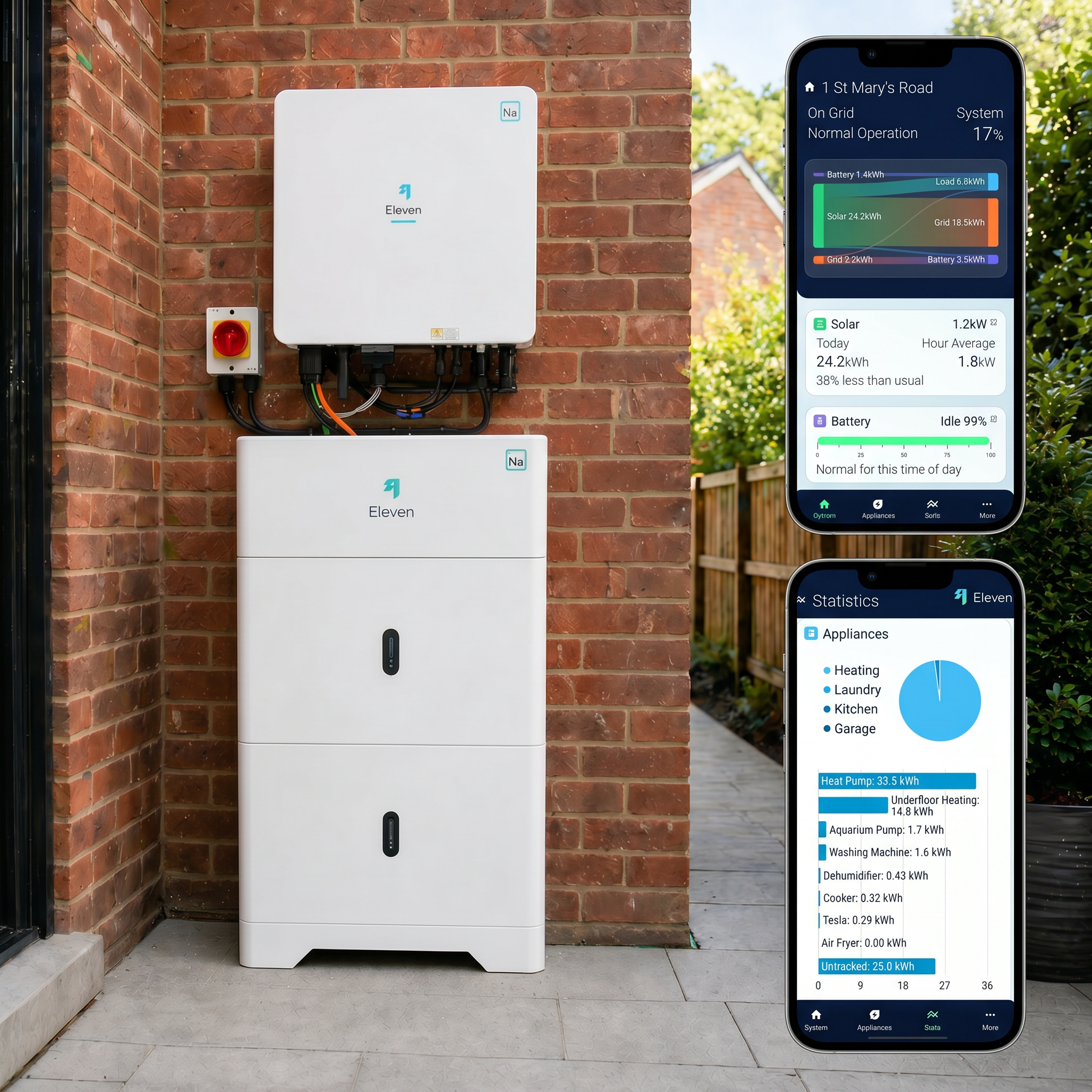 The Galvani battery system combines modular home energy storage with convenient monitoring through the Eleven Energy app.
Designed for Year-Round Operation
For a battery installed in or around a home, operating temperature is an important consideration.
The Eleven Energy Galvani has specified charging temperatures from -20°C to 55°C and discharging temperatures from -30°C to 55°C.
It also has an IP65 enclosure rating, indicating protection against dust ingress and water jets from any direction under the relevant test conditions.
These specifications provide useful flexibility when considering where a battery might be installed. However, the correct location, mounting arrangements and environmental conditions must always follow the manufacturer’s installation instructions.
A suitably qualified installer can help assess the most appropriate position for the system, taking into account access, protection and the specific requirements of the property.
Designed for Long-Term Energy Storage
A home battery is a long-term investment, so it is important to consider more than its headline storage capacity.
The Eleven Energy Galvani offers a number of specifications worth considering when comparing battery systems:
- Module capacity: 4.5 kWh
- Depth of discharge: Up to 92% on-grid and 95% off-grid, according to the specified operating configuration
- Warranty: 10 years or 8,000 cycles, subject to the manufacturer’s warranty terms
Depth of discharge describes how much of a battery’s rated capacity can be used. A higher usable proportion means more of the stored energy is available to supply the home.
It is also important to consider the warranty conditions, including any cycle limits, operating requirements and capacity retention provisions.
When comparing systems, looking at usable capacity and warranty terms alongside the initial purchase price can give a more useful picture of long-term value.
Is Sodium-Ion the Future of Home Battery Storage?
Sodium-ion technology is an exciting development in the energy storage industry, but it is not simply a replacement for every existing battery chemistry.
Lithium-ion batteries remain an established option, with a mature supply chain and a wide range of products available. Sodium-ion brings a different set of characteristics, including the use of abundant raw materials and promising low-temperature performance in certain chemistries.
For home energy storage, these characteristics are particularly interesting when combined with modular battery designs, solar PV systems and intelligent energy management.
As the technology develops, sodium-ion batteries could become an increasingly common choice for homeowners looking for alternatives in the growing home battery market.
The Eleven Energy Galvani provides an opportunity to explore this technology today, with a stackable design, substantial expansion potential and mobile app monitoring.
What Our Customers Say
Choosing a solar and battery installation is about more than the equipment itself. Good advice, careful installation and ongoing support all make a difference to the experience.
Here’s what one of our customers had to say after their solar and battery storage installation with Solar Save:
“Really pleased with our solar and storage install. Super smooth process from start to finish. Really good advice on choices and additional requests from us were incorporated easily. Quick install and very neat and tidy all around both in terms of cabling and clean up after completion. Detailed training and excellent information packs provided. We are really pleased with every aspect of the process and thoroughly recommend Solar Save, Petar, Diana and Dan the sparky for anyone planning an install.”
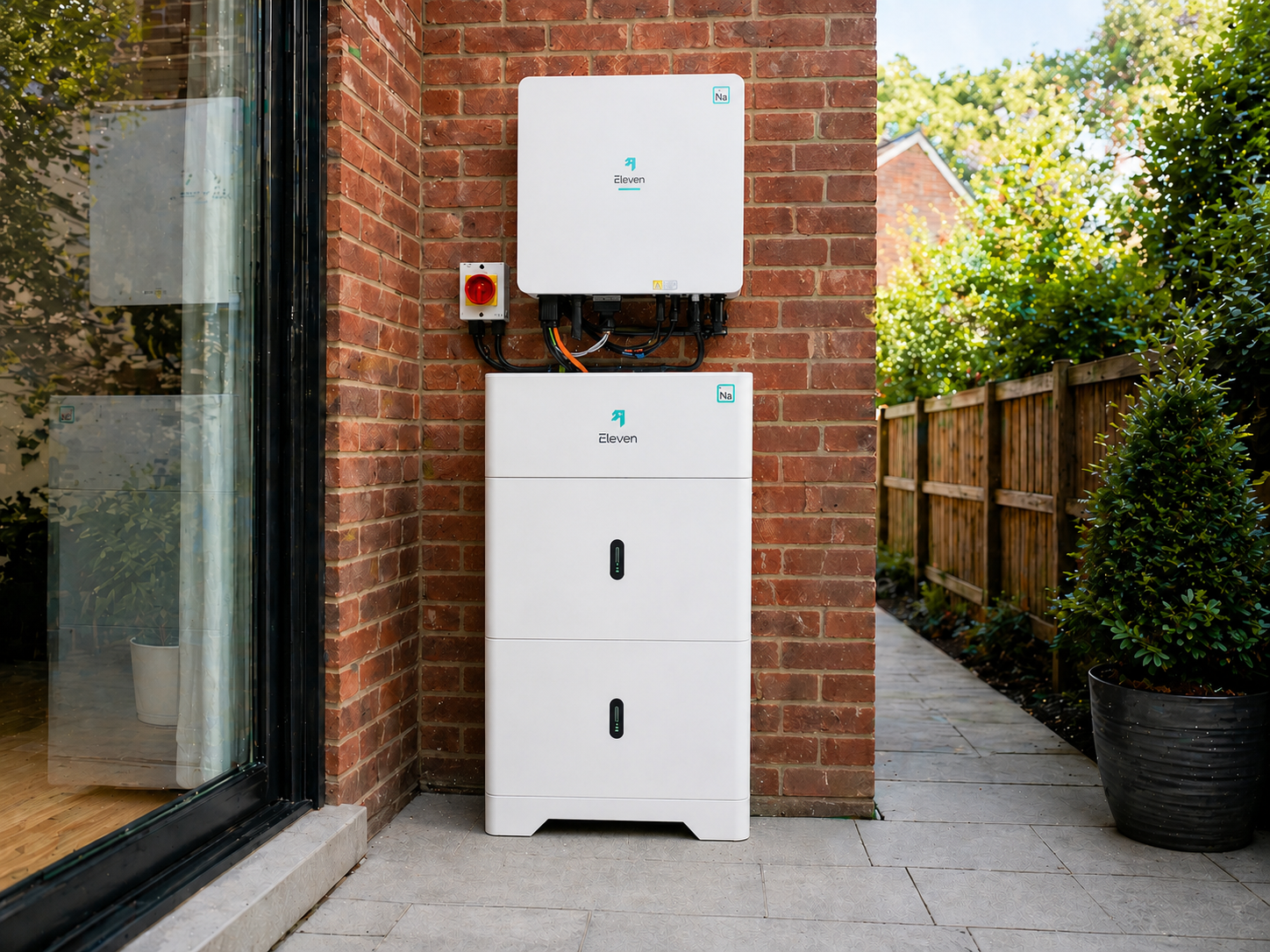
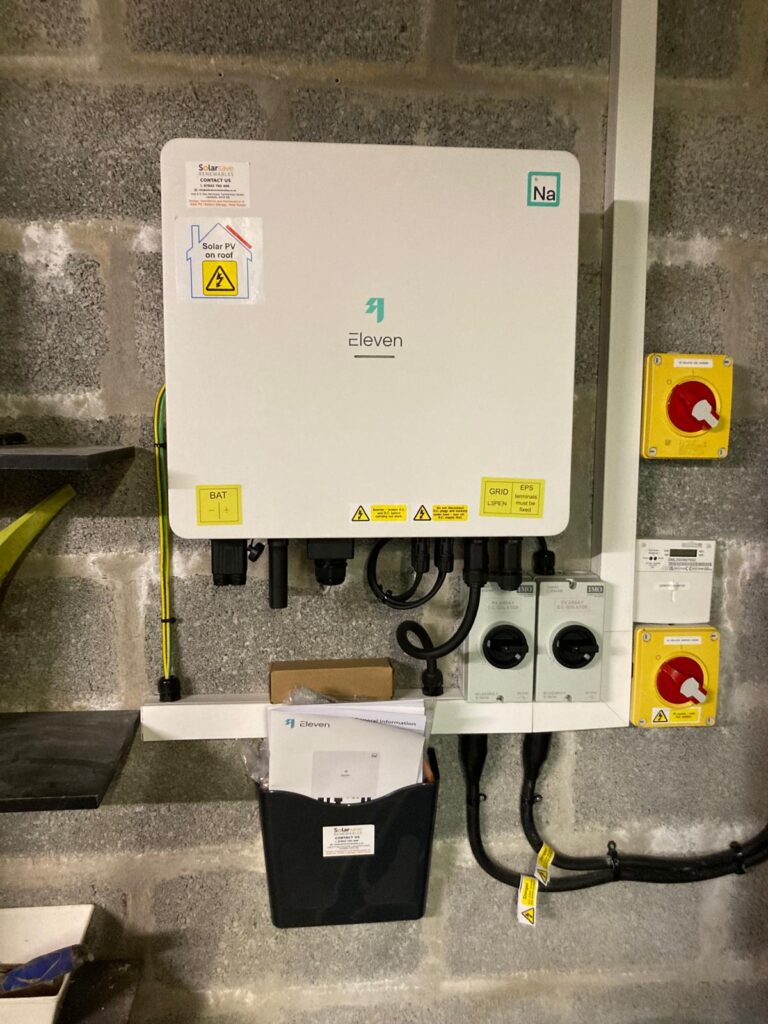 An Eleven Energy inverter installed by the Solar Save Renewables team as part of a home solar and battery storage system.
Interested in an Eleven Energy Sodium-Ion Battery?
Choosing a home battery is an important decision, and the best system for your property will depend on your existing solar installation, electricity usage, available space and future energy requirements.
As an approved installer within the Eleven Energy Trusted Installer Network, Solar Save can help you explore whether the Galvani sodium-ion battery system is suitable for your home.
Whether you are considering battery storage alongside a new solar PV installation or looking to add storage to an existing system, we can discuss your requirements and help you understand the options available.
Get in touch to find out more about Eleven Energy sodium-ion battery storage and how it could work in your home.