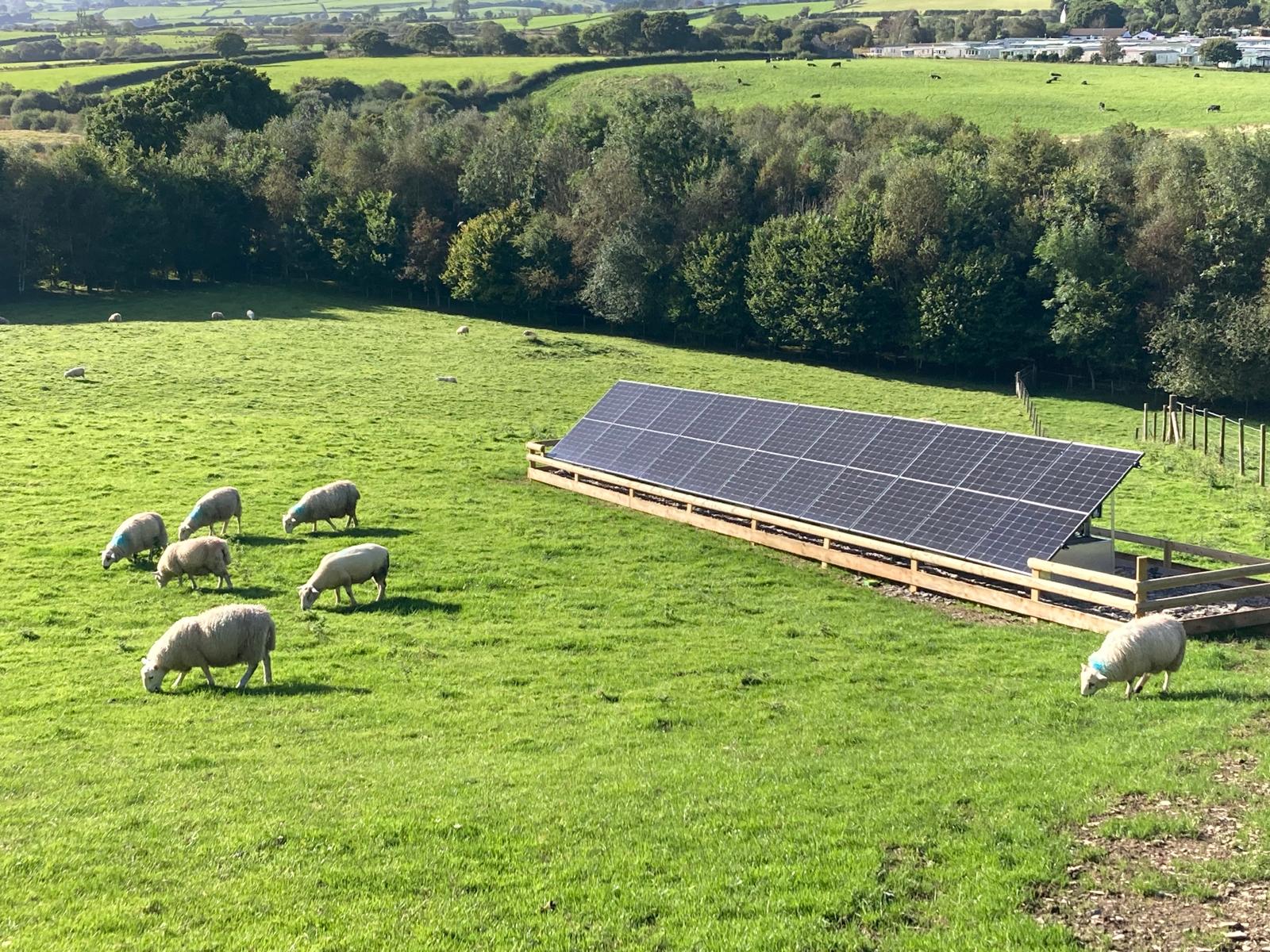
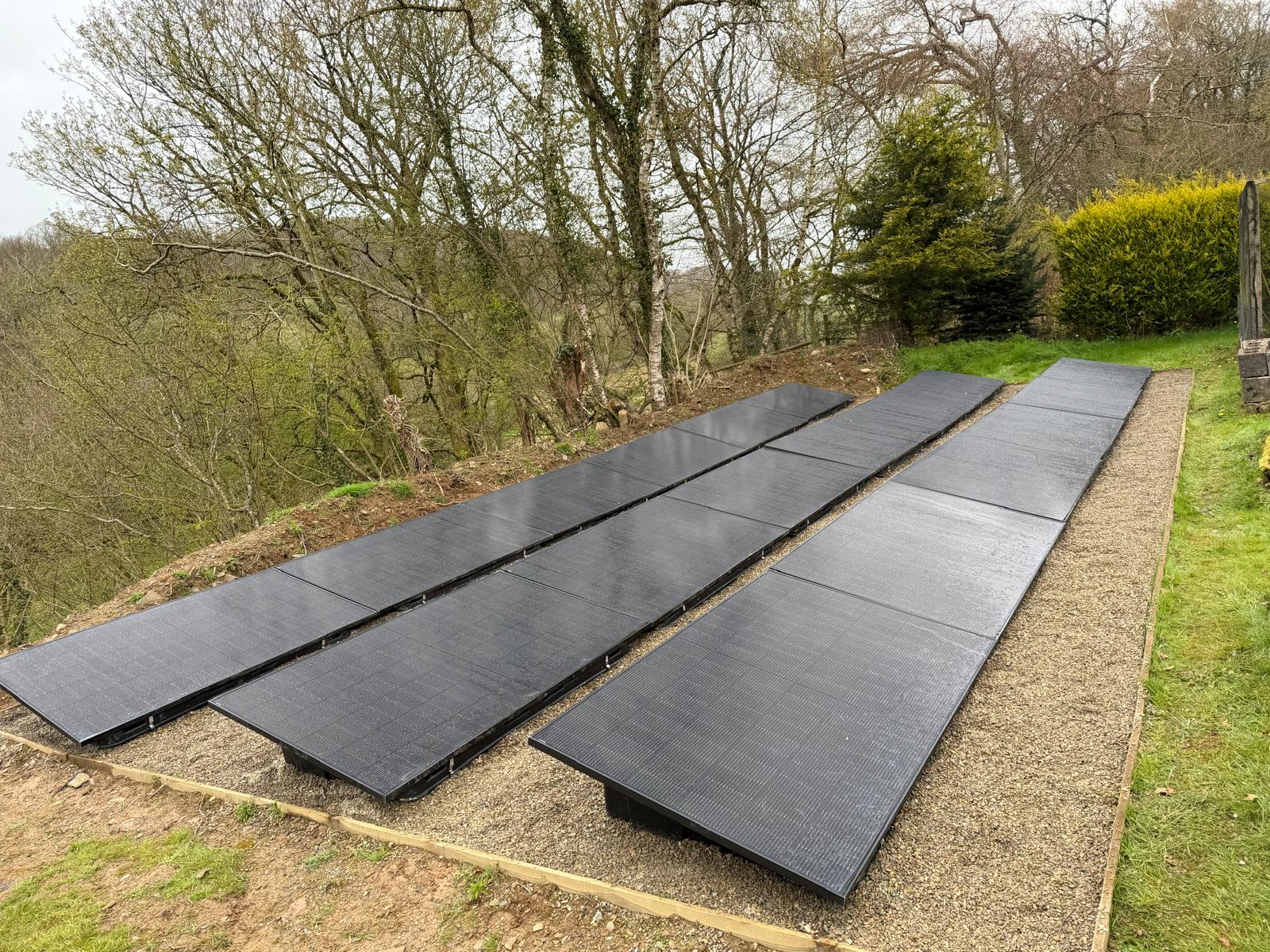
9kWp ground-mounted solar PV installation in Ceredigion Wales

Is SolarEdge Worth it? A Beautiful 9kWp Install in Ceredigion

When people start exploring solar energy, they often focus on the panels. But in reality, one of the most important decisions is choosing the right inverter technology. Recently, we completed a 9kWp ground-mounted solar installation in Pont Llanio, Ceredigion, using a SolarEdge hybrid inverter and 10kWh of battery storage. The project gave us a great opportunity to answer a question we hear regularly: Is SolarEdge actually worth the extra investment? Rather than focusing on specifications alone, this article looks at a real installation and why SolarEdge was chosen for this particular property.

The Challenge

Like many rural properties across Wales, the homeowners wanted to reduce their reliance on grid electricity and make better use of renewable energy. The property had plenty of available land, making a ground-mounted system a practical alternative to a roof-mounted installation. This allowed us to position the panels at an optimal tilt and orientation — something that’s not always possible on rooftops in the UK, where roof pitch and direction can typically reduce solar output by 10–25% compared to an ideal south-facing array. The homeowners were also interested in battery storage, allowing them to use more of their solar energy in the evening and reduce electricity imports from the grid. More details about how this works can be found in our solar PV and battery storage guide.

The Solution

After assessing the property’s energy requirements, we designed and installed:
  • 9kWp ground-mounted solar PV system
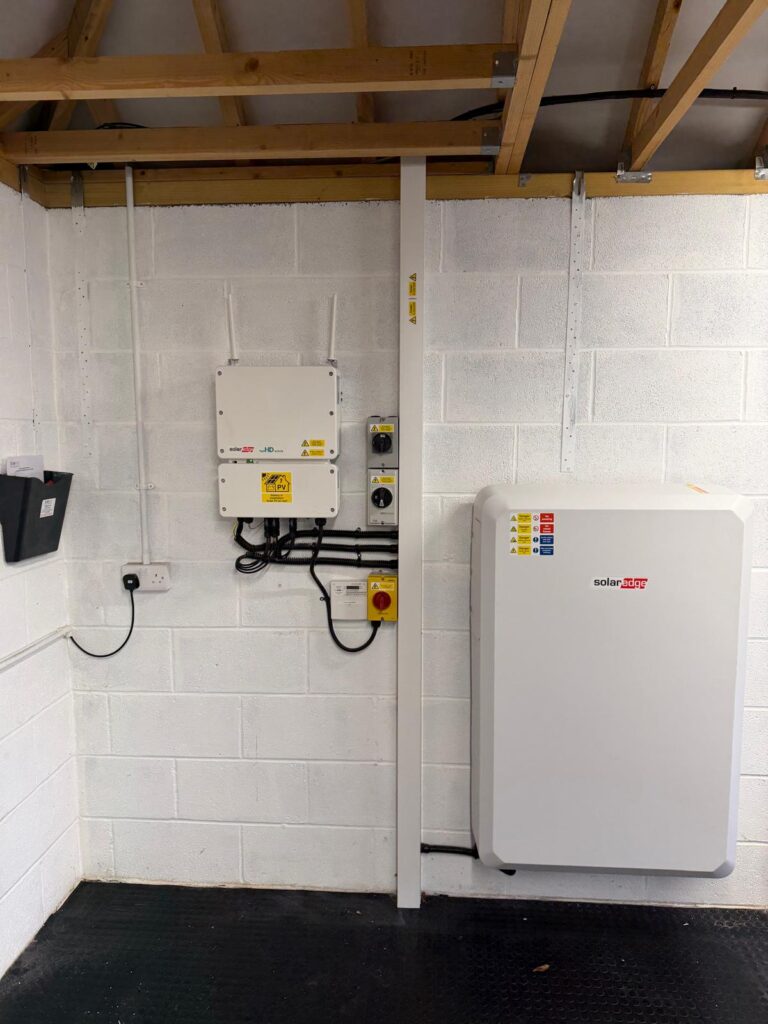
  • 6kW SolarEdge hybrid inverter
  • 10kWh battery storage system
  • Advanced monitoring platform
The aim was simple: maximise energy generation, increase self-consumption, and create a system that can adapt to the household’s future energy needs.

Why We Chose SolarEdge for This Project

Not every installation requires SolarEdge. For straightforward systems with no shading and simple layouts, a traditional string inverter can perform very well. However, this project benefited from several key advantages that SolarEdge offers. The first is flexibility. Because SolarEdge uses power optimisers on each panel, every module operates independently. This gives us more freedom when designing the system and helps ensure each panel performs at its maximum potential. For homeowners, this means the system is better able to capture every available unit of solar energy.

When One Panel Doesn’t Drag Down the Whole System

One of the biggest differences between SolarEdge and a traditional string inverter is how individual panels are managed. In a standard system, panels are connected in strings. If one panel becomes shaded or underperforms, it can reduce the output of the entire string. SolarEdge uses power optimisers to allow each panel to operate independently. This means:
  • Reduced impact from partial shading
  • More consistent system performance
  • Greater visibility of individual panel output
  • Easier identification of performance issues
While no solar system can generate power from shade, SolarEdge helps reduce the energy losses that shading can cause. For Welsh homes, where weather conditions can change quickly throughout the day, this can make a noticeable difference over time.

Battery Storage Makes a Bigger Difference Than Most People Expect

One of the most common misconceptions about solar is that generating electricity automatically means lower bills. In reality, savings depend heavily on when you use that electricity. Most households use a significant amount of energy in the morning and evening, when solar production is lower. That’s why we paired this installation with 10kWh of battery storage. Instead of exporting surplus electricity during the day, the system stores excess energy for later use. This allows the homeowners to:
  • Use more of their own solar energy
  • Reduce electricity imports from the grid
  • Improve energy independence
  • Maximise the value of their system
For many households, battery storage can have a greater impact on savings than adding additional panels.

Monitoring and Peace of Mind

Another reason we often recommend SolarEdge is the level of visibility it provides. Using the SolarEdge monitoring platform, the system can be viewed in real time via smartphone or computer. Homeowners can see:
  • Real-time energy generation
  • Battery charging and discharging activity
  • Household energy consumption
  • Performance of individual panels
For anyone interested in understanding where their energy comes from and how it is being used, this level of detail is extremely valuable.

So, Is SolarEdge Worth It?

The honest answer is: it depends. SolarEdge is not always the cheapest option, and not every property requires panel-level optimisation. However, for homeowners who value:
  • Maximum system performance
  • Detailed monitoring
  • Battery integration
  • Design flexibility
  • Future expandability
it can be an excellent long-term investment. In the case of this 9kWp installation in Ceredigion, SolarEdge provided the flexibility, monitoring capabilities, and battery integration that made it the right fit for the project.

Key Takeaway

The most important lesson from this installation is not that SolarEdge is right for everyone. It’s that the best solar system is the one designed around your property, your energy usage, and your future plans. For this homeowner in Pont Llanio, a ground-mounted solar array combined with SolarEdge technology and battery storage created a highly efficient renewable energy system designed to deliver benefits for many years to come. If you’re considering solar panels, battery storage, or a complete home energy upgrade, taking the time to design the right system from the start can make all the difference.
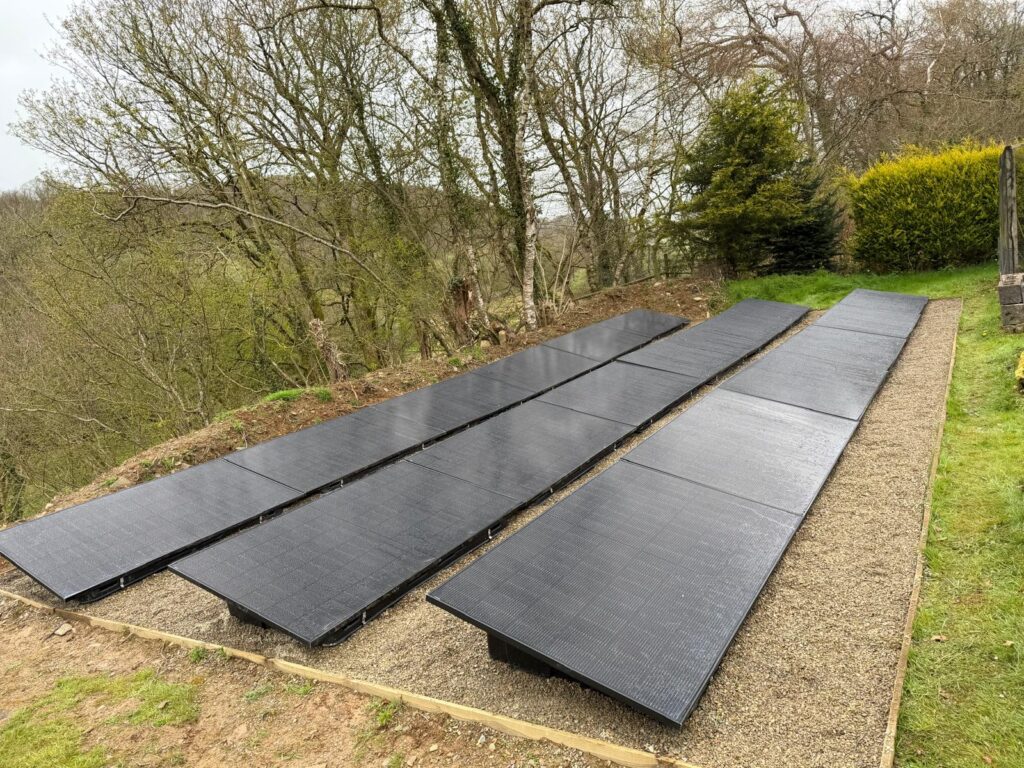
9kWp ground-mounted solar PV installation in Ceredigion Wales
SolarEdge hybrid inverter with 10kWh battery storage installation in Wales
Read More
ground mounted solar panels _farm_Wales

The Truth About How Many Solar Panels You Need

Planning to install solar panels at home but not sure how many you need? The answer depends on your household’s energy use, roof size, and future plans. While most UK homes require around 10–14 panels, this guide will help you estimate the right system size for your property and understand what factors to consider before installation.

Real-Life Example

The Davies family from Llandeilo have a four-bedroom detached home using 4,800 kWh per year. After installing a 13-panel solar system, they now cover 92% of their annual electricity needs. Their battery stores excess energy for evening use, so they only buy electricity during the coldest winter months.

Step-by-Step Calculation for Wales

1. Find Your Annual Electricity Usage (kWh)

This is the most important starting point — you’ll find it on your electricity bill. UK averages (Ofgem 2024):
  • Small, energy-efficient flat: 1,800–2,000 kWh per year
  • Typical 3-bedroom house: 3,100–4,200 kWh per year
  • Large home with electric heating or EV: 8,000–12,000+ kWh per year
For this example, let’s use a typical 3-bedroom Welsh home consuming 3,600 kWh per year.

2. Estimate Your Ideal System Size (kWp)

We can estimate system size using this simplified formula, adjusted for Welsh solar conditions: System size (kWp) = Annual electricity use (kWh) ÷ (Annual sunlight hours × System efficiency)
  • Average annual sunlight hours in Wales: 3.0 hours/day × 365 = 1,095 hours
  • System efficiency: typically 85% (0.85), accounting for inverter and temperature losses
Calculation: 3,600 ÷ (1,095 × 0.85) = 3,600 ÷ 930 = ≈ 3.9 kWp

3. Calculate How Many Panels You Need

Modern high-efficiency panels in the UK range from 350W–450W. Number of panels = System size (kW) ÷ Panel wattage (kW) Using a 415W (0.415 kW) panel: 3.9 ÷ 0.415 = ≈ 9.4 panels You’d therefore need around 10 panels to meet this household’s annual electricity needs — forming a 4 kWp system.

Result Summary

Description Value
Annual usage 3,600 kWh
Average Welsh sunlight 1,095 hours
System size ~3.9 kWp
Panel size 415W
Panels needed 10
Roof area required 18–20 m² (approx.)
In short: A typical three-bedroom home in Wales would need around 10 high-efficiency panels (≈4 kWp) to meet its annual energy needs, depending on roof orientation and lifestyle.

Recommended System Size by Property Type

Property Type Recommended System Panels (440–450W) Roof Space Needed
1–2 bed terraced 2.5 kW 6 10–12 m²
3 bed semi-detached 4 kW 9 16–18 m²
4 bed detached 5.5 kW 13 23–26 m²
5+ bed detached 8 kW+ 18+ 32 m²+

Expected Annual Energy Generation

Property Type Annual Generation
1–2 bed terraced 2,125–2,250 kWh
3 bed semi-detached 3,400–3,600 kWh
4 bed detached 4,675–5,000 kWh
5+ bed detached 6,800–7,200+ kWh

UK & Wales-Specific Considerations

1. Roof Orientation Matters

  • South-facing (ideal): Generates the most electricity.
  • East or West-facing (good): Expect around 15–25% lower efficiency — you may need one or two extra panels.
  • North-facing: Usually not cost-effective for solar PV.

2. Smart Export Guarantee (SEG)

Under the UK’s SEG scheme, you’re paid for the surplus electricity your system exports to the grid.
  • Typical rates: 1p–15p per kWh exported
  • Grid import cost: around 28p per kWh
It’s therefore more beneficial to use your solar energy in real time — for example, by running appliances during daylight hours.

Enhance Your System with Battery Storage

“Adding battery storage was the best decision we made. During an October storm, our lights stayed on while neighbours were in the dark. The system paid for itself that week alone.” — The Morgan Family, Brecon (8.2kW system with 13.5kWh storage)

Battery Benefits

  • Use solar energy at night and during peak times
  • Charge your EV from stored solar power
  • Backup during power cuts
  • Optimise costs using smart tariffs

Your Action Plan

  1. Check your energy bills – find your exact annual kWh usage.
  2. Use a UK calculator – the Energy Saving Trust offers reliable solar sizing tools.
  3. Get local quotes – trusted Welsh installers can:
    • Use satellite data to assess your roof’s tilt, direction, and shading
    • Provide accurate generation forecasts for your location
    • Advise on the best SEG tariffs and battery options

Choosing the right solar panel setup isn’t about guessing — it’s about understanding how your home uses energy and what your roof can deliver. Taking time to match your system size to your real needs means better performance, lower costs, and a smoother path to long-term savings. Whether you’re just starting your research or ready to plan, understanding your ideal system size is the best first step towards making solar work for you.

Read More